

By submitting this form, you agree to our Terms and Conditions
Energy & Climate Optimization
Designing Windows for Real Canadian Performance
Energy performance is not just about “triple pane.” It’s about how ratings, coatings, spacers, climate design, and installation work together to deliver year-round comfort.
ENERGY STAR® Ratings

What It Is
ENERGY STAR® is a government-backed performance certification that confirms a window meets strict energy efficiency standards for specific climate zones.
In Canada and northern U.S. regions, windows must meet higher insulation requirements than in warmer climates.
Performance Impact
-
Ensures tested thermal performance
-
Reduces heat loss in winter
-
Improves summer cooling efficiency
-
Increases resale appeal
-
Often qualifies for rebates
Tradeoffs
-
ENERGY STAR is a baseline — not the highest level possible
-
Two ENERGY STAR windows may still perform differently (ratings matter)
Best Choice
Always choose ENERGY STAR-certified windows as a minimum.
For cold climates, look beyond the logo — focus on U-value and SHGC numbers.
U-Value & SHGC Explained
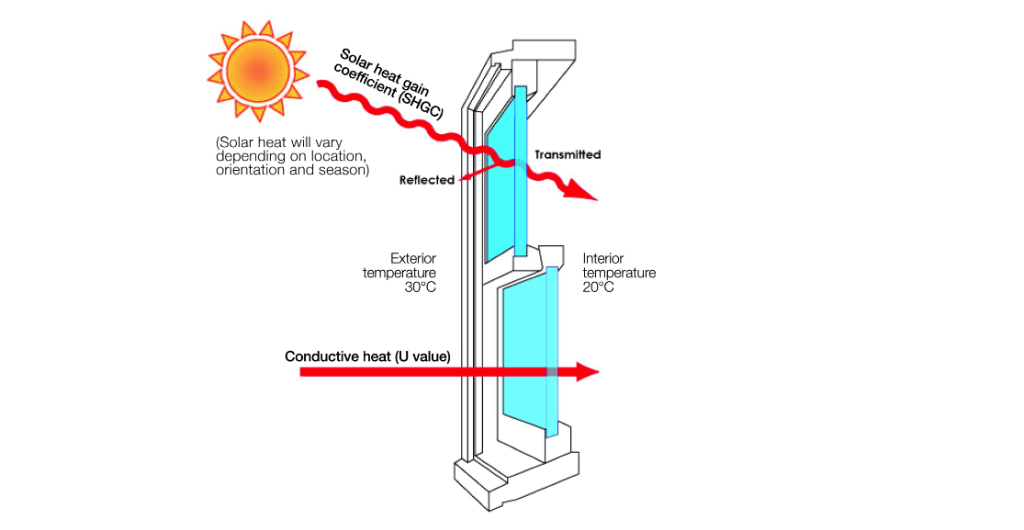
What It Is
U-Value
Measures how much heat passes through the window.
Lower number = better insulation.
SHGC (Solar Heat Gain Coefficient)
Measures how much solar heat enters through the glass.
Lower number = less solar heat gain.
Performance Impact
| Metric | What It Controls | Ideal Direction (Cold Climate) |
|---|---|---|
| U-Value | Heat loss | Lower |
| SHGC | Solar heat gain | Balanced (moderate) |
Tradeoffs
-
Very low SHGC reduces summer overheating but also reduces passive winter heat.
-
Extremely low U-values usually mean triple pane (higher cost).
Best Choice
For Canadian winters:
-
U-value: as low as possible (0.20–0.25 range ideal for premium builds)
-
SHGC: moderate (not too low unless overheating is a problem)
If the home gets excessive sun exposure → lower SHGC helps.
If heating bills are the main concern → prioritize U-value.
Cold Climate Packages (Canadian Winters)
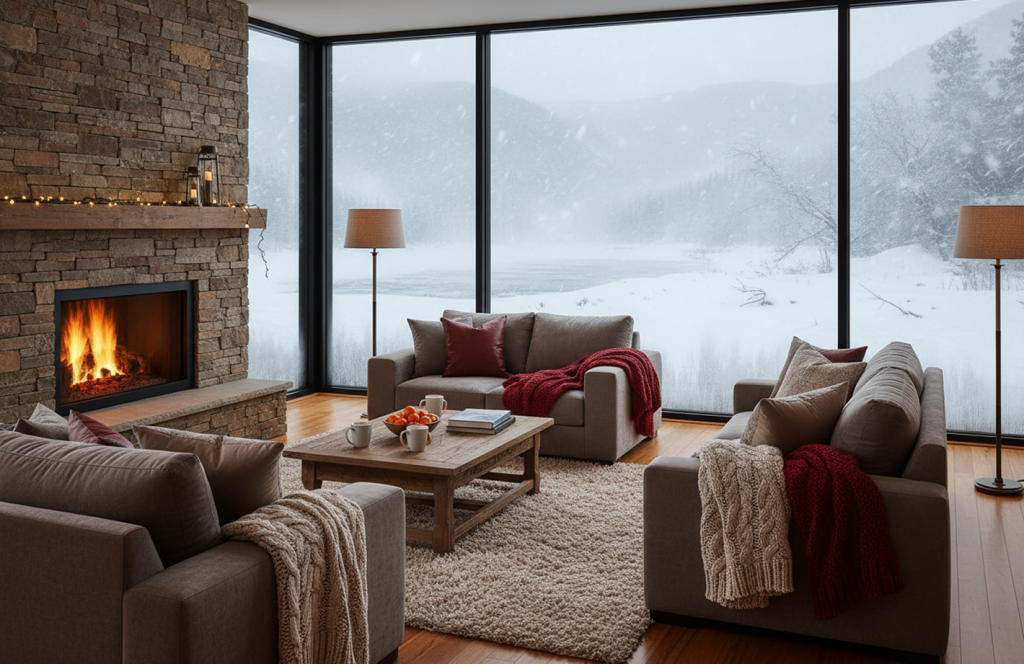
What It Is
A cold-climate glass package is engineered specifically for freezing temperatures and condensation resistance.
Typically includes:
-
Triple pane glass
-
Low-E coating
-
Argon or Krypton gas
-
Warm edge spacers
-
Insulated multi-chamber frames
Performance Impact
-
Interior glass stays warmer
-
Reduced drafts
-
Less condensation
-
Lower heating demand
-
Improved comfort near large windows
Tradeoffs
-
Higher upfront cost
-
Slightly heavier units
-
Slightly reduced light compared to standard double pane
Best Choice
If you live in Ontario, Quebec, Alberta, or northern climates, a cold-climate package is worth the upgrade — especially for large glass areas or bedrooms.
If winters are mild → high-quality double pane may be sufficient.
Comparison: Standard vs Cold Climate Optimized Package
| Feature | Standard Double Pane | Cold Climate Package |
|---|---|---|
| U-Value | Moderate | Low (Better) |
| Condensation Risk | Moderate | Low |
| Comfort Near Glass | Good | Excellent |
| Winter Performance | Solid | Superior |
| Cost | Lower | Higher |
| Best For | Mild climates | Cold regions |
Warm Edge Spacer Systems
What It Is
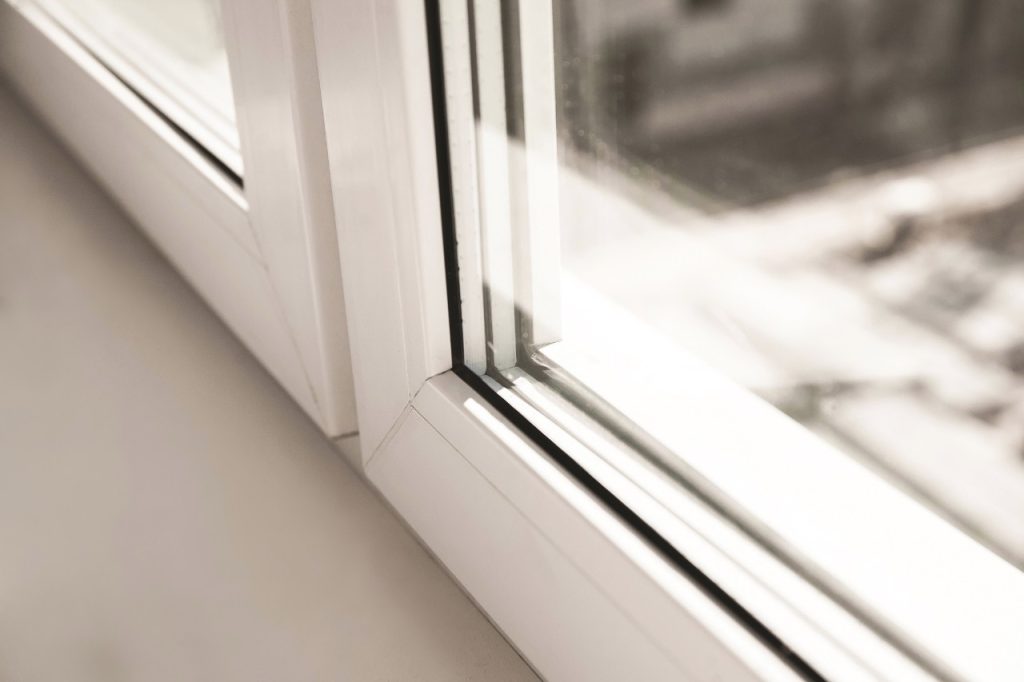
The spacer separates the glass panes and seals the gas inside.
Traditional spacers were aluminum (cold conductor).
Warm edge spacers use composite or insulating materials to reduce heat transfer at the glass edge.
Performance Impact
-
Reduces edge heat loss
-
Improves condensation resistance
-
Extends seal lifespan
-
Slightly improves overall U-value
Tradeoffs
-
Slight cost increase
-
Performance improvement is subtle but meaningful over time
Best Choice
Always choose warm edge spacers in cold climates.
It’s a small upgrade that significantly reduces winter condensation around the glass edges.
Condensation Resistance
What It Is
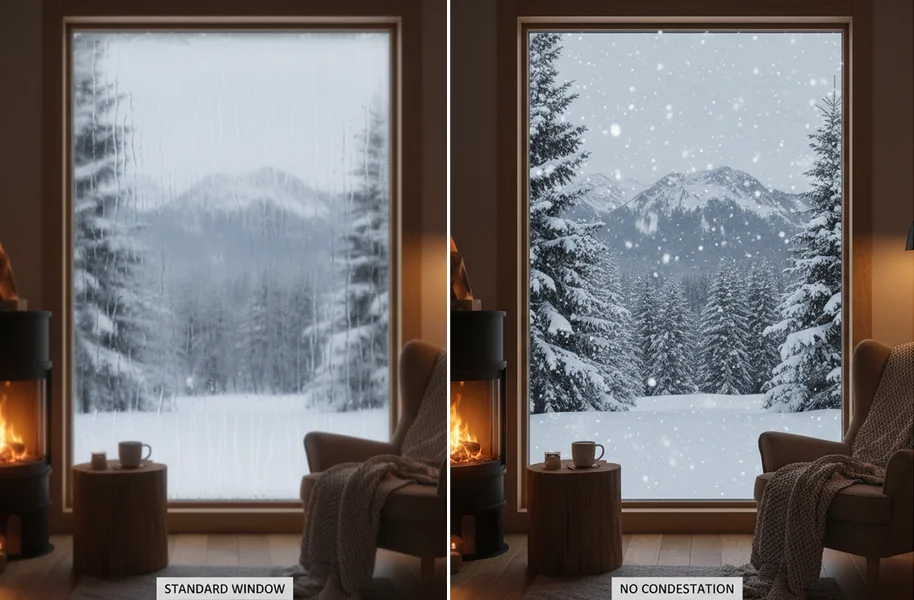
Condensation forms when interior humidity meets cold glass surfaces.
Better insulation keeps the interior glass warmer — reducing moisture buildup.
Performance Impact
Higher condensation resistance means:
-
Less water pooling on sills
-
Less mold risk
-
Less frame damage
-
Clearer views in winter
Tradeoffs
Even the best windows can show condensation if:
-
Indoor humidity is too high
-
Ventilation is poor
-
Air circulation is blocked
Windows reduce condensation risk — they don’t eliminate humidity problems.
Best Choice
To minimize condensation in Canadian winters:
✔ Triple pane glass
✔ Low U-value
✔ Warm edge spacers
✔ Proper installation & sealing
✔ Balanced indoor humidity (30–40%)
Comparison
| Feature | Standard Glass | Acoustic Glass |
|---|---|---|
| Traffic Noise Reduction | Moderate | Significant |
| Laminated Layer | No | Yes |
| Security | Standard | Enhanced |
| Best For | Quiet areas | Busy streets |