

By submitting this form, you agree to our Terms and Conditions
Glass Technology & Performance: A Practical Guide (and How to Choose)
When people say “good windows,” they usually mean good glass. The frame matters, but the glass package (panes, coatings, gas, spacers, and safety options) is what drives comfort, energy bills, condensation resistance, noise, and UV protection.
Below is a detailed, decision-focused evaluation of each key glass upgrade.
Double vs Triple Pane
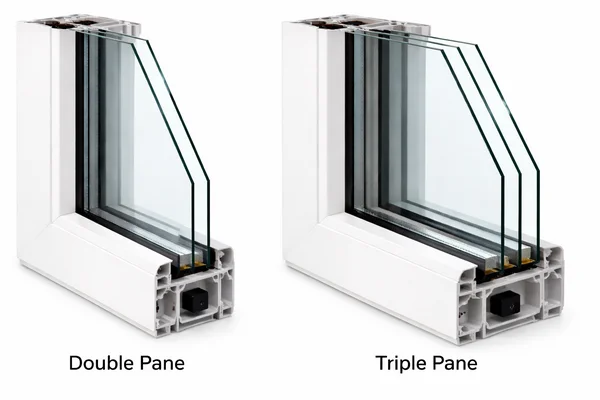
What it is
-
Double pane (2 panes): Two sheets of glass with a sealed airspace between them.
-
Triple pane (3 panes): Three sheets of glass with two sealed airspaces.
Performance impact
-
Insulation (heat loss): Triple generally insulates better, helping rooms feel less “cold near the glass.”
-
Comfort: Triple reduces radiant chill and drafts (because the inner glass stays warmer).
-
Condensation resistance: Triple usually reduces interior condensation risk in winter (but humidity control still matters).
-
Sound: Triple can help, but only when built for acoustics (more below). More panes alone isn’t a magic sound fix.
Tradeoffs
-
Cost: Triple costs more.
-
Weight: Triple is heavier → needs strong hardware and good installation.
-
Light: Slightly less visible light compared to double (varies by coating).
Best choice
-
Double pane: Budget-focused projects, mild rooms, or when you’re prioritizing value.
-
Triple pane: Cold climates, north-facing rooms, large glass areas, bedrooms, and anyone chasing “premium comfort.”
Quick rule: If winters are serious and comfort matters, triple pane is the upgrade most homeowners feel immediately.
Comparison
| Feature | Double Pane | Triple Pane |
|---|---|---|
| Number of Glass Layers | 2 | 3 |
| Insulation Level | High | Maximum |
| Condensation Resistance | Good | Excellent |
| Sound Reduction | Moderate | Better (with acoustic design) |
| Cost | More Affordable | Premium Upgrade |
| Best For | Balanced value | Cold climates & comfort |
Low-E Coatings (LoE2, LoE3)
What it is
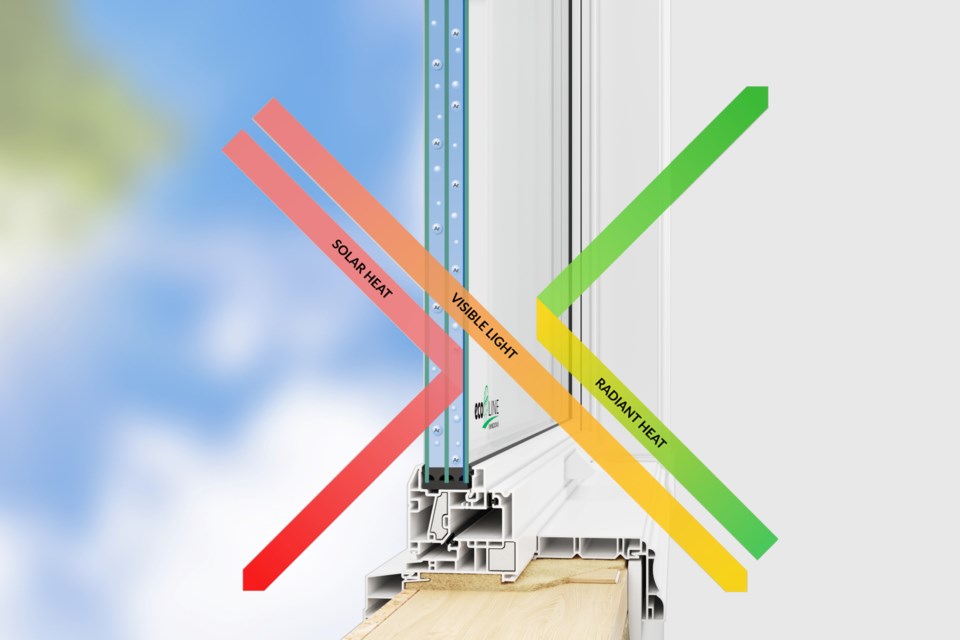
Low-E is a microscopically thin coating on the glass that reflects heat radiation.
-
In winter: helps keep indoor heat inside.
-
In summer: can reduce solar heat coming in (depending on coating type).
LoE2 vs LoE3 (simple meaning)
Brands differ, but generally:
-
LoE2 (often “double-silver”): Balanced—good insulation + good light transmission.
-
LoE3 (often “triple-silver”): Stronger solar control—blocks more heat and often more UV, but may reduce light slightly.
Performance impact
-
Lower energy loss: Both help reduce heat transfer.
-
More comfort: Inner glass stays warmer in winter.
-
UV protection: Helps reduce fading on floors/furniture.
-
Summer overheating control: Stronger with LoE3-type packages.
Tradeoffs
-
Light vs control: More solar control can mean slightly less brightness.
-
Tint/appearance: Some high solar-control coatings can look a bit more reflective.
Best choice
-
LoE2: Great “all-around” choice for most homes, especially if you want maximum natural light.
-
LoE3: Better for large sunny exposures (big south/west windows), rooms that overheat, or modern homes with lots of glass.
Quick rule: If you struggle with summer heat and glare, lean LoE3. If you want the brightest, balanced option, choose LoE2.
Comparison
| Feature | LoE2 (Balanced) | LoE3 (Solar Control) |
|---|---|---|
| Heat Retention | Strong | Strong |
| Solar Heat Blocking | Moderate | Higher |
| Natural Light | Maximum | Slightly Reduced |
| Best For | General use | Large sun exposure |
Argon / Krypton Gas Fill
What it is
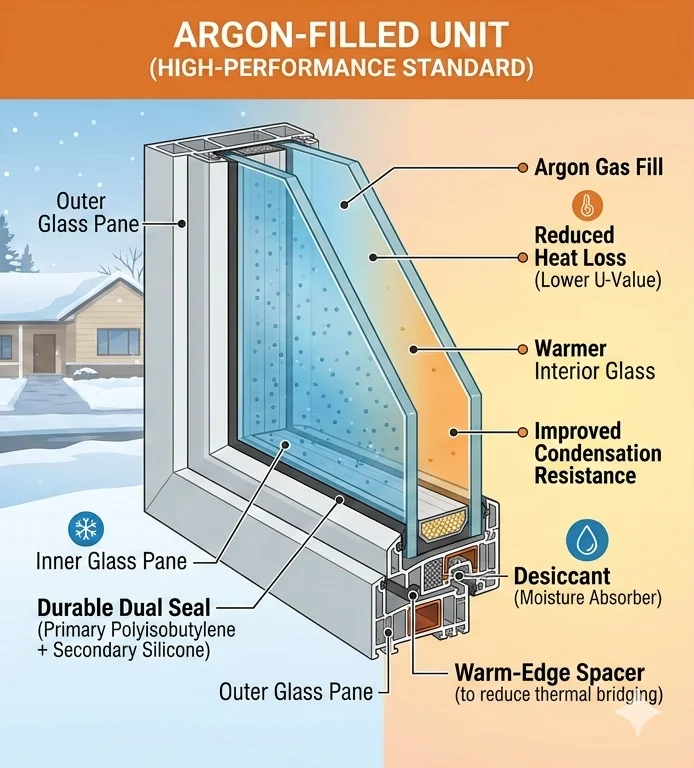
Instead of plain air between panes, manufacturers fill the sealed space with gas:
-
Argon: Most common, strong value.
-
Krypton: Higher performance, used in thinner spaces or premium builds.
Performance impact
-
Better insulation: Reduces heat transfer through the sealed space.
-
Better comfort: Helps keep the inside pane warmer.
-
Better condensation resistance: Supports a warmer interior glass surface.
Tradeoffs
-
Cost: Krypton costs more than argon.
-
Real-world difference: Krypton can help, but the jump from “air to argon” is usually more noticeable than “argon to krypton” unless the unit is designed around it.
Best choice
-
Argon: Best value and standard for quality windows.
-
Krypton: Premium upgrade—useful for thin triple-pane designs or where top-tier performance is required.
Quick rule: Always choose argon at minimum for quality windows. Add krypton when you’re building a premium glass package and it’s spec’d properly.
Comparison
| Feature | Argon | Krypton |
|---|---|---|
| Performance Boost | Strong | Higher |
| Cost | Standard | Premium |
| Common Use | Double & Triple | High-end Triple |
| Best For | Most homes | Ultra-performance builds |
Solar Control Glass
What it is
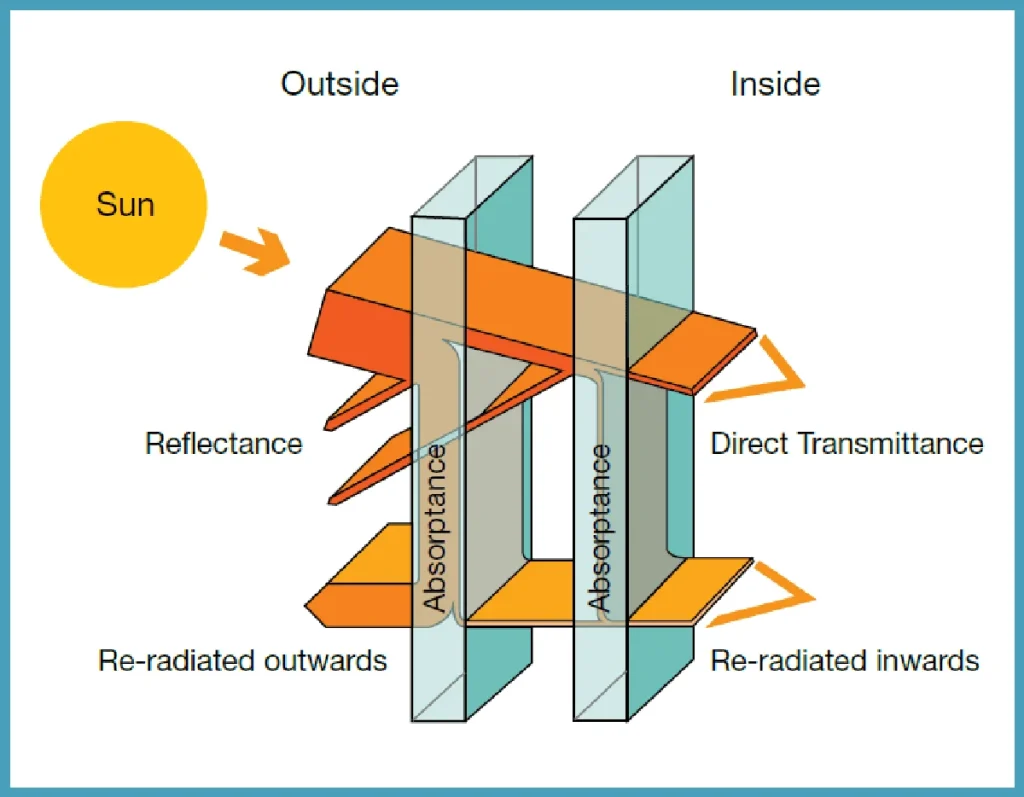
Glass designed to reduce solar heat gain (SHGC) and glare. This is done through special Low-E coatings and sometimes tint.
Performance impact
-
Less overheating: Big benefit for south/west-facing windows.
-
Less glare: More comfortable for TVs and screens.
-
Lower cooling load: Especially helpful in rooms with lots of sun.
Tradeoffs
-
Less passive heat in winter: If you rely on sunlight to warm a room, strong solar control can reduce that benefit.
-
Reduced daylight: Some packages can slightly darken the view.
Best choice
-
Homes with large glass areas, modern designs, and sun exposure that causes discomfort.
-
Rooms like living rooms with big west-facing windows, offices, and upper floors that get hot.
Quick rule: If a room gets uncomfortably hot or bright, choose solar control. If you love winter sun warmth, choose a more balanced coating.
Comparison
| Benefit | Standard Glass | Solar Control |
|---|---|---|
| Heat Gain | High | Reduced |
| Glare | Strong | Controlled |
| Energy Efficiency | Standard | Improved |
| Comfort | Variable | Stable |
Soundproof (Acoustic) Glass
What it is
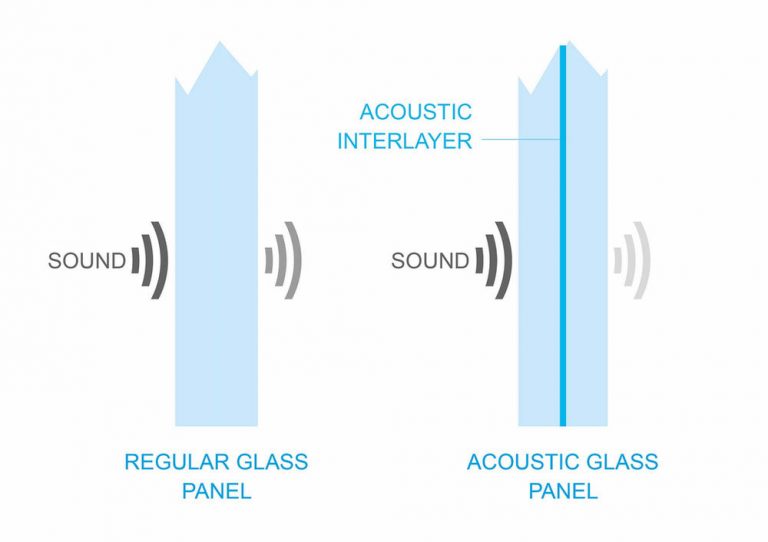
“Acoustic glass” isn’t just “triple pane.” It’s a combination of:
-
Asymmetrical pane thickness (e.g., 4mm + 6mm) to disrupt sound waves
-
Laminated glass layer (often the biggest improvement)
-
Proper airspace tuning and sealing
Performance impact
-
Reduces traffic noise, voices, barking, city sounds
-
Improves “quiet comfort” noticeably when designed correctly
Tradeoffs
-
Cost: Acoustic packages cost more.
-
Weight: Laminated and thicker glass increases weight.
-
Not all noise is equal: Low-frequency sounds (trucks) are harder to eliminate; better glass helps but won’t create “silence.”
Best choice
-
Homes near roads, schools, mosques, busy streets, or noisy neighbors.
-
Bedrooms (high value upgrade), nurseries, home offices.
Quick rule: For real noise reduction, ask for laminated + asymmetrical glass—not just “triple pane.”
Comparison
| Feature | Standard Glass | Acoustic Glass |
|---|---|---|
| Traffic Noise Reduction | Moderate | Significant |
| Laminated Layer | No | Yes |
| Security | Standard | Enhanced |
| Best For | Quiet areas | Busy streets |
Tempered & Laminated Safety Glass
Tempered glass
Heat-treated so it’s stronger and breaks into small, less-sharp pieces.
Best for:
-
Near doors, low-to-floor glass, bathrooms, stairwells, and areas required by building codes.
Pros:
-
Safer break pattern
-
Stronger than standard glass
Cons:
-
If it breaks, it shatters and must be replaced
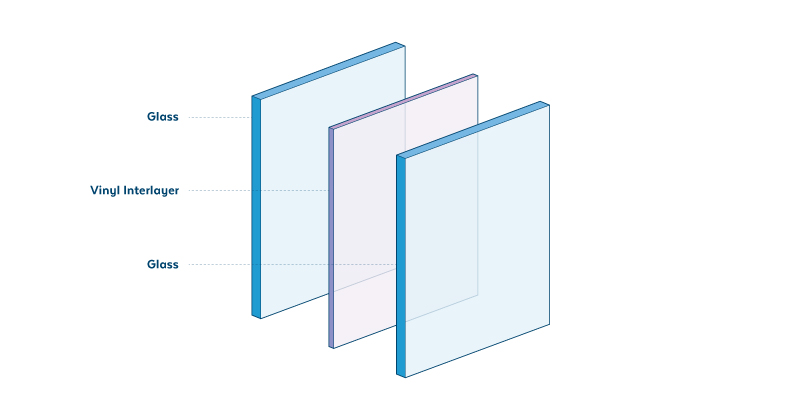
Laminated glass
Two layers of glass bonded with an inner film (like a car windshield).
Best for:
-
Security-focused windows
-
Noise reduction (excellent)
-
UV protection
-
Areas where you want the glass to stay in place if cracked
Pros:
-
Better security (harder to penetrate)
-
Excellent sound reduction
-
Holds together when cracked
Cons:
-
Costs more than tempered
-
Heavier
Quick rule:
-
Need code/safety near doors? Tempered
-
Want noise + security upgrade? Laminated
Comparison
| Feature | Tempered | Laminated |
|---|---|---|
| Break Pattern | Small pieces | Holds together |
| Security | Moderate | High |
| Noise Reduction | Low | Strong |
| Best For | Code-required areas | Security & acoustic upgrade |